Image Source: Yahoo.News
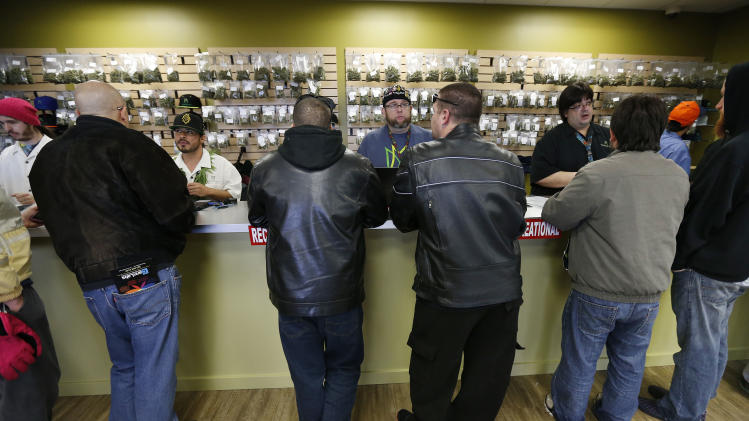
Colorado’s pot sellers are open for businesses and enjoying brisk sales since recreational marijuana became legal under state law on New Year’s Day. What those stores do with the revenue they bring in, however, is a different question—one that’s gaining salience and attention as more and more legal pot businesses open up shop.
Anti-money laundering rules forbid banks from processing payments or holding accounts for businesses that deal in drugs that remain illegal under federal law. That has left pot businesses forced to operate largely in cash, hauling bags of bills in to pay state taxes and manage their books. As marijuana legalization spreads, with Washington State permitting recreational use and additional states embracing medical uses, more businesses will face this cash conundrum.
The governors of Colorado and Washington have pressed federal bank regulators to let financial institutions open accounts for businesses that follow the state’s pot regulations, and yesterday the Denver City Council passed a resolution (PDF) “urging swift federal action to provide guidance for banking and other financial institutions to serve legal marijuana businesses.”
They are seeking clarity in the banking world similar to what the U.S. Justice Department has already provided by saying it generally won’t pursue criminal drug cases against businesses or users following state laws. In August, the DOJ said that it could decide to bring cases if a situation violates any of eight conditions, such as failure to prevent sales to minors or to customers who illegally resell pot across state lines.
The Justice Department is already working on a memo to provide some guidance for banks, the Wall Street Journal reports. Whether one will provide enough clarity for banks to feel comfortable isn’t yet clear. Other agencies involved in the discussion include the Financial Crimes Enforcement Network, the Federal Deposit Insurance Corp., the Federal Reserve Board, the Office of the Comptroller of the Currency, and the National Credit Union Administration.
Meanwhile, Bob Hasewaga and three other Washington State senators have submitted a bill to create a state-run bank that would be the sole depository for Washington’s marijuana businesses. Hasegawa acknowledges that the bill is a long shot, but he argues that pot businesses need a solution. “They are hoping against hope that the Treasury Department and the financial regulators are going to come up a letter similar to what the U.S. attorney general produced,” he says. “The only alternative right now is cash-based, which is totally unacceptable and cannot adhere to the attorney general’s guidelines because it can’t track every last dollar.”
Isidor Hefter is a senior partner at Rosen Seymour Shapss Martin & Company LLPholds with over 20 years of experience. To know more about him, visit this Facebook page.